
Justice For Goa!!!
- anshikasingla513
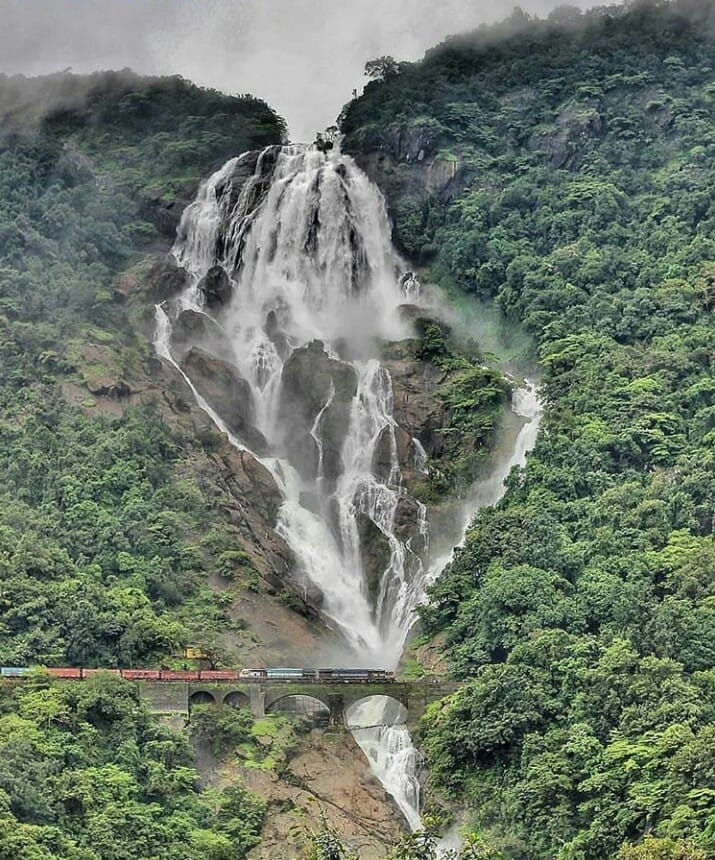
- Nov 15, 2020
- 7 min read

Goa is a beautiful Indian state, usually interchangeable with the words like paradise or nirvana on earth. The beauty of its beaches, lush-green forests, structural richness along with the lavishness of flora and fauna in Goa are well known among the tourists.
However, these panoramic beauties like Dudhsagar waterfalls and wildlife and biodiversity protectors, i.e, Bhagwan Mahaveer Wildlife Sanctuary and Mollem National Park are now being terrorized with the massive infrastructural projects.
What are the-three infrastructural projects?
The three infrastructural projects, namely, the double-tracking of the railway line, the four laning of National Highway 4-A and the laying of a 400kV transmission line have been gauged to cut down Goa’s main green zones.
During the county-wide lockdown due to widespread pandemic of COVID-19, the national board for wildlife cleared more than 30 forest clearance proposals, which included the clearance of these proposals too.
Four-lane highway expansion

NH4A is the 153 km national highway running from Belgavi to Panaji that connects Goa and Karnataka, also falls within Bhagwan Mahaveer Wildlife Sanctuary and Mollem National Park.
Currently- the road is a double-lane road having a carriageway of 7km and a right of way of 12km.
Proposal- To widen it as a four-lane road with a carriageway of 14km and a right of way of 26km largely by creating completely new roads and highways.
Consequence- It would involve cutting down more than 10,000 trees and diversion of more than 30 hectares of protected forest area.
2. Double-tracking of the railway line

Another project is Castlerock-Kulem railway doubling which is a part of a larger project, i.e, Hospet-Tinaighat-Castlerock-Kulem-Vasco railway doubling project undertaken by M/s. Rail Vikas Nigam Limited (RVNL). The total length of the line is 345km and passes through Bhagwan Mahaveer Wildlife Sanctuary in two parts.
Proposal- To double the railway line throughout.
Consequence- The total project would involve diversion of the forest with falling down of more than 20,000 trees.
3. Laying of a 400kV transmission line

The third project is also based on a larger project, i.e, 400 KV D/C Narendra (Karnataka)- Xeldom (Goa) Transmission line which starts at Narendra village in Dharwad district, Karnataka and terminates at 400/220 KV substation at Xeldom in Goa.
The project is being carried out by M/s Goa Tamnar Transmission Project Ltd. (Sterlite Power).
Proposal- Estimated 3.15 Km of transmission line to be constructed through Bhagwan Mahaveer Wildlife sanctuary.
Consequence- Construction would require another diversion of about 12 hectares of land and will involve more than 4000 trees to be felled down.
Boosting Coal-handling Capacity

The Mormugao Port Trust (MPT) in Goa’s Vasco is one of India’s major ports connected to Maharashtra and Karnataka through the South Central Railway and the NH17A, NH17B and NH4A highways. Primarily used for transferring and handling iron ores and coals. According to the Ministry of Shipping/Indian Port Associations Sagarmala master plan for MPT, the current coal handling capacity is 12 mtpa (million tonnes per annum). The document states that MPT has to develop additional coal handling capacity to fulfil future coal demands in the region. The railway line has to be doubled to boost that figure. The Adani terminal at MPT (berth number 7) moves coal from MPT to other parts of India through the existing South Western Railway, as well as the NH17B highway. The NH17-B highway connects to the NH4A highway which moves through the Mollem region. However, The Adani Group refuted and condemned that the news is circulated by politically motivated groups and it is fictitious business interests comprising road and railway projects in the state of Goa.
What is forest fragmentation?

These infrastructural projects will fragment forest in four parts laying down negative consequences on the biodiversity of the Bhagwan Mahaveer Wildlife Sanctuary and Mollem National Park.
Forest fragmentation is the breaking of large, contiguous, forested areas into smaller pieces of forest; typically these pieces are separated by roads, agriculture, utility corridors, subdivisions, or other human development. The dividing of a large thick forest area into smaller parts, increasing its edges.
Most of the wildlife species could not survive in these fragmented forest edges, impacting the whole ecosystem of Goa.
Why are these projects unsafe for Goa?
The Western Ghats, of which most of the protected forest area is 150 million years old, even older than Himalayas, one of the 36 biodiversity hotspots in the whole world. One mature tree absorbs around 22 kilos of CO2 each year, while a young tree can only absorb 6 kilos/ year.
These forest’s stream- The river Mandovi is the foremost source of portable drinking water.
The Intergovernmental Panel on Climate Change (IPCC) Report 2019 found that the Western Ghats is one of the most resilient ecosystems to climate change when they did a 1.5 degree impact assessment. This is extremely important as very few ecosystems are resilient to climate change and global warming.
Bhagwan Mahaveer Wildlife Sanctuary and Mollem National Park are the treasures that Goans take pride in, one of the 8 biological hotspots of Goa and a part of UNESCO’s World Heritage Sites.
These beautiful forests protect not only several vulnerable, endangered, threatened, endemic flora and fauna but also have multiple streams and various temples with historic significance, and are home to tribal communities that have been taking care of this land for generations.
The fragmentation of the wildlife corridor will INCREASE cases of human and wildlife conflict.
Dudhsagar is one of the tallest waterfalls (310 mts) of India and this forest is an important revenue source for nature-based tourism. Along with Dudhsagar, hundreds of river feeders originate in this forest and are the lifeline for the state’s water supply.
Goans fighting for survival

On november 1, 2020, over 5000 protestors including students, Middle aged and also the old-aged goans stood out to the already existing Chandor railway line in South Goa for a midnight protest against double-tacking of the railway line.

The student community of Goa have launched their dissent voice in the name of ‘Mollem memory project’. There are certain hashtags trending like ‘#savemollem’, ‘#aamchemollem’, ‘#notocoal’ etc. The Mollem Memory Project has binded over 300 college institutes from Goa and neighbouring states gathering support for the cause of the Mollem. They used posters, poems and short videos to address the aspects of conservation and urged to put the environment before profits and development.

Students also wrote a letter to the Union Environment Minister Prakash Javadekar, in which they stated that, “We, the present generation, are custodians over this inheritance for our children and future generations. It is our primary duty to ensure they inherit at least as much as we did. If we succeed, we may use the fruit of the inheritance. Any loss is a loss to all of us and all future generations.”
Another community fighting for survival of Goa is Tourism industry. 159 tourism professionals wrote to the Central Empowered Committee (CEC) in New Delhi voiced their opposition against the three linear projects. The signatories comprised a diverse range of stakeholders across the tourism industry: hotel and restaurant owners; tour operators, guides and outdoor educators and researchers across north and south Goa as well as coastal and hinterland forest areas. Nearly 150 tourism industry stakeholders previously wrote a letter to the Union ministers for environment and forests on June 25.
Political stand on the matter

The government, and its concerned ministries had blatantly ignored the growing concerns regarding these projects passing through Goa’s sensitive protected regions, and the inevitable damage that will be caused by them. Instead, they alleged that the protestors are “outsiders” or being misled for political reasons.
Goa CM Pramod Sawant said that the government would not go ahead with widening of Panaji -Belagavi national highway “right now”, the double-tracking of the railway route would be done through tunnels in the Mollem forests. He also added to state that although, 400 KV power Tanmar transmission project would be completed soon but not more than 13,000 trees would be cut.
Master plan behind the projects

The Mormugao Port Trust (MPT) expansion was first fought against by the Vasco fishermen in 2016. MPT now stands as a gate of sorts for bringing in coal from Australia and Indonesia, and to transport it to the rest of the country. According to environmental activists, the cost of moving coal through Maharashtra and Karnataka would lead to an increase in the price of the coal, and Goa, therefore, is the convenient option. Currently, MPT witnesses a handling of around 12 million tonnes of coal and the master plan aspires to increase its capacity to 51 million tonnes by 2035. Goa already meets more than enough of its power requirements from existing power sources, then why the need for a transmission line that has already led to the felling of 2670 trees?

With the laying of the transmission line, Goa will have double the power than is its requirement.
It is clear that this is not for the people of Goa, it is for high tension industries. Moreover, if an EIA for the transmission line was conducted, it is not publicly available, which is a violation of the fundamental right to information under Article 19(1)(a) of the Indian constitution.
The forest clearance proposals for the two transmission lines and the approach road to substation, for which stage-1 forest clearance was granted on April 29, 2020, were on the Ministry of Environment, Forest and Climate Change’s web portal PARIVESH, but they have now disappeared.
Moreover, the felling of 2,670 trees for the substation for the transmission line at Sangod is in clear violation of the Supreme Court’s order in 2015 wherein it directed that “No Objection Certificate(s)” will not be issued in Goa for the conversion of any land of over 1 hectare that has natural vegetation with tree canopy density in excess of 0.1. The area of land cleared for the substation is 11.8 hectares and its canopy density is 0.7.
The clearances granted by the National Board for Wildlife to the railway and highway project are currently under challenge in the High Court of Bombay at Goa.
The fragmented implementation of the larger coal hub project is shrouded in secrecy at every stage, with the Major Ports Bill 2020 being the final curtain act.
Conclusion
Goa is the most favored holiday destination for India. However, the fact that its environmental framework is at great risk has been convenient to ignore for mainstream media. The clearance has been given in the times of lockdown and no discussion has been done, also, the goan panchayats have an authority to decide what will be constructed in their areas and what will not, but they also have not been consulted regarding these major developmental projects.


Well done!! Can get every information from this!!!!
Very Informative